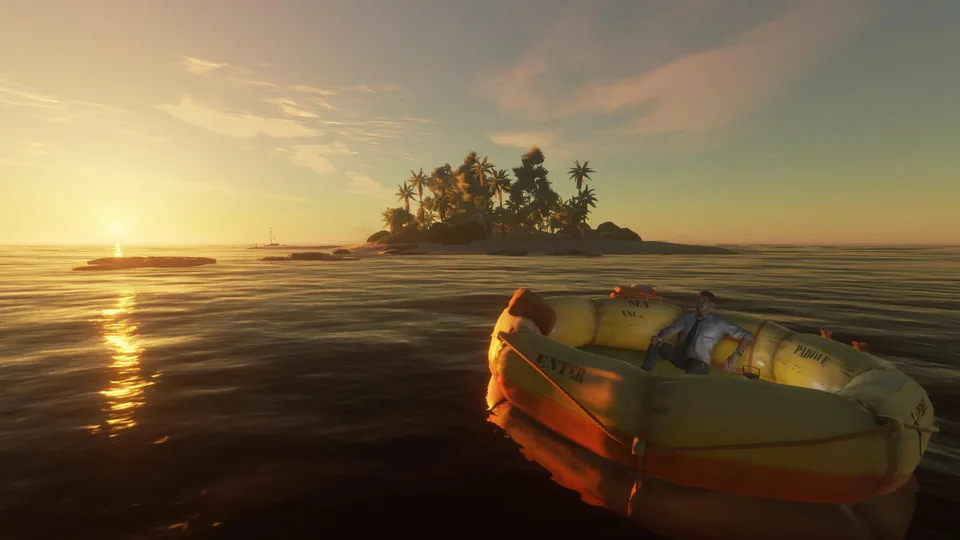
Stranded Deep Ending Explained: Plot Twist Breakdown
Get the complete stranded deep ending explained, breaking down the plane crash twist, survival challenges, and player reactions.
Published: Stranded Deep Wiki Editorial Team
Table of Contents
Introduction to the Pacific Survival Journey
When you first wash ashore after a catastrophic plane crash, understanding the ultimate fate of your survivor becomes the driving force behind every crafted spear and filtered drop of water. The true meaning behind the stranded deep ending has sparked countless debates across forums and video essays ever since the game's release. For players who dedicate dozens of hours to mastering crafting trees, fighting bosses, and navigating treacherous ocean waters, comprehending this narrative conclusion is essential for bringing closure to an otherwise demanding survival adventure.
Survival games often rely on a clear sense of progression, moving from desperate vulnerability to triumphant escape. In this title developed by Beam Team Games, the path to freedom requires meticulous preparation, gathering scarce resources like potatoes for fuel, and enduring hostile wildlife. Yet, the final moments subvert traditional survival tropes in a way that continues to divide the gaming community.
Preparing for Escape and Survival Mechanics
Before reaching the climax of the narrative, players must overcome significant mechanical hurdles. Survival in this Pacific setting demands constant resource management, treating venomous snake bites, and building reliable water stills. Community reports highlight that normal difficulty settings offer virtually no hand-holding, making every successful voyage between islands feel earned.
Survival Aspect
Player Requirement
Challenge Level
Hydration
Coconut water, water stills
Moderate
Fuel Production
Potato farms, jerry cans
High
Health Management
Bandages, antidote flasks
High
Boss Encounters
Spear weapons, rafts
Moderate
Player experience shows that gathering four potatoes to boil fuel requires patience while waiting for crops to grow amidst unpredictable weather and aggressive fauna. Once these preparations are complete, players embark on their final journey to the abandoned aircraft carrier and runway.
Breaking Down the Stranded Deep Ending
After loading the repaired aircraft with sufficient meat, water, and fuel, the protagonist boards the plane and takes off into the night sky. What follows is a jarring narrative pivot. The screen fades to black, skipping forward three hours to show the plane still airborne—until it violently collides with another private jet, mirroring the exact plane crash from the game's opening cinematic.
Repair the Aircraft: Gather engine parts, duct tape, and other essential materials scattered across various shipwrecks and island locations.
Stock Supplies: Fill jerry cans with refined potato fuel, secure clean water, and pack preserved meat for the long flight home.
Initiate Takeoff: Board the fixed plane at the airstrip and trigger the final cutscene sequence.
Experience the Twist: Witness the unexpected mid-air collision that loops the protagonist back to square one.
This time-loop revelation implies that the act of escaping triggered the very disaster that stranded the protagonist in the Pacific ocean in the first place, trapping them in an eternal loop.
Community Reception and Narrative Analysis
The narrative choice has generated intense discussion among survival game enthusiasts. While titles like Subnautica or The Forest weave deep lore throughout their gameplay loops, this title keeps its story minimal until the final seconds. According to community reports, many players feel that a sudden sci-fi wormhole trope undermines the grounded realism established during the core gameplay loop.
Narrative Ambition
The developers attempted a philosophical statement about destiny, fatalism, and the illusion of human control in hostile environments.
Player Frustration
Many survivors felt cheated after spending dozens of hours mastering harsh mechanics, only to have their hard-earned freedom instantly erased by a cynical punchline.
Evaluating the narrative payoff involves weighing the atmospheric isolation against the abruptness of the final cinematic.
Feature Comparison
Stranded Deep
Other Survival Games (e.g., Subnautica)
Story Delivery
Minimal environmental hints, abrupt twist
Integrated lore logs and progressive objectives
Escape Method
Repaired propeller plane
Built rocket or submarine vessel
Ending Resolution
Time-loop paradox
Definitive escape or planetary liberation
Evaluating Gameplay Versus Narrative Payoff
Despite the divisive conclusion, the overall survival experience remains a staple of the indie survival genre. Reviewers and players frequently debate whether a disappointing cinematic ruins an otherwise engaging sandbox experience. The freedom to build sprawling island bases, tame the ocean, and conquer legendary sea creatures provides hundreds of hours of entertainment that overshadows the brief final cutscene.
Tip
Focus on base-building, cartography, and resource automation if you want to maximize your enjoyment, treating the final escape sequence as an optional sandbox milestone rather than a traditional narrative reward.
Frequently Asked Questions
What actually happens at the conclusion of Stranded Deep?
The protagonist successfully repairs a plane and escapes the islands, only to crash into another identical private jet three hours later, looping back to the original plane crash that started the game.
Is there an official explanation for the time loop?
The developers have not provided an official detailed backstory, leaving the community to interpret the event as a sci-fi wormhole or a predestination paradox trapping the survivor forever.
How long does it take to reach the conclusion?
Depending on exploration speed and resource gathering efficiency, most players spend between 30 to 50 hours exploring islands, defeating bosses, and preparing their escape gear.